
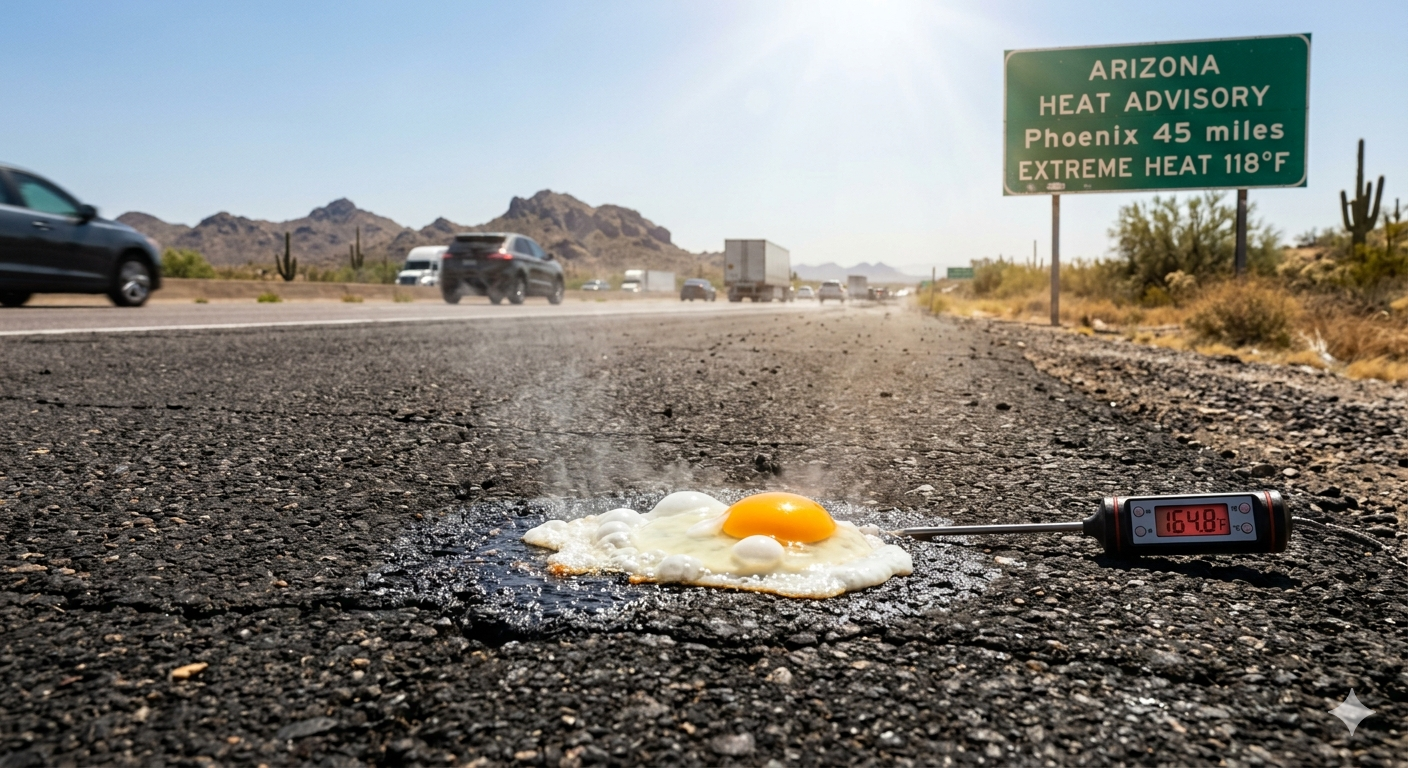
The Numbers Behind Arizona's Extreme Heat
That image of a fried egg on Arizona asphalt isn't a gimmick — it's physics. When air temperature hits 118°F near Phoenix, asphalt surface temperature regularly reaches 160–175°F. That's not just uncomfortable. It's a radiant heat source that dramatically increases the thermal burden on anyone working nearby.
Most heat safety discussions focus on air temperature. But workers on Arizona job sites — especially road work, solar installation, and ground-level construction — aren't just in the air. They're working directly above, kneeling on, and walking across surfaces that are cooking at temperatures that would blister skin on contact.
What Radiant Heat Actually Does to Workers
Radiant heat from hot surfaces adds to the heat load beyond what air temperature alone accounts for. Standard heat index calculations don't fully capture this. A worker crouching over 165°F asphalt to make a connection or set a form is receiving radiant heat from below in addition to solar radiation from above and ambient air heat from all sides.
This is why workers in ground-level trades — concrete formwork, underground utility work, paving, road marking — are at disproportionately high risk compared to what air temperature alone would predict. Their effective heat exposure is significantly higher than what the thermometer shows.
When a worker's clothing absorbs radiant heat from a 160°F surface and their body is simultaneously trying to cool itself through sweating in low-humidity Arizona air, the system can be overwhelmed faster than most supervisors expect. Heat stroke can develop in as little as 20–30 minutes under these conditions without adequate rest breaks in a truly cooled environment.
Why Standard Hydration and Shade Advice Isn't Enough
The "drink water and rest in the shade" guidance was developed for conditions significantly less extreme than Arizona summer peak. At 118°F ambient with full solar radiation and 160°F ground surfaces, the human body's cooling system is under maximum stress.
- Water intake helps but doesn't solve the core temperature problem — hydration supports sweating, but if the worker's core temperature is already elevated, drinking water alone won't bring it down fast enough during a 10-minute shade break
- Shade in Arizona summer still means 95–105°F — meaningful core temperature recovery requires a cooled environment, not just shade
- Electrolyte loss accelerates in extreme heat — plain water without electrolyte replacement during heavy sweating can cause hyponatremia (dangerously low sodium), which mimics heat exhaustion symptoms and can be life-threatening
- Acclimated workers are still at risk — even fully acclimated workers experience significant performance degradation and heat illness risk when surface temperatures are this extreme without adequate recovery periods
Practical Implications for Your Site Planning
If you're running crews on ground-level work in Arizona summer, here's how to adjust your approach to account for radiant heat:
- Schedule ground-level heavy work in the early morning window — 6–9 AM is when surface temps are lowest. By 10 AM, asphalt is already above 130°F
- Use the hottest afternoon hours for tasks with less ground exposure — elevated work, interior work, planning and coordination tasks
- Increase break frequency for ground-level workers — the NIOSH work/rest ratios should be applied conservatively for anyone working directly above hot surfaces
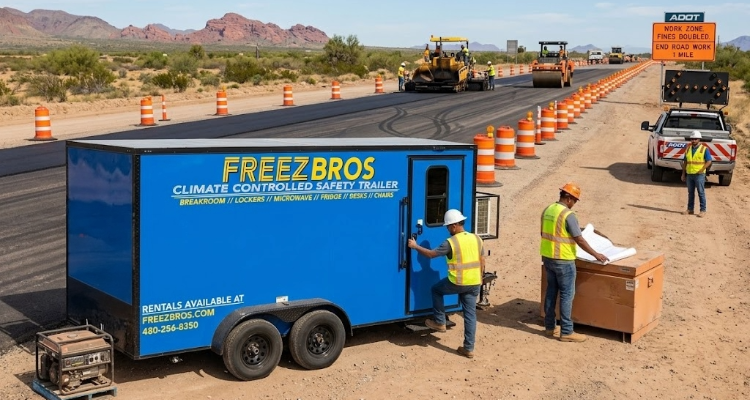
- Ensure your rest area genuinely cools — a 70°F interior is the minimum for meaningful core temperature recovery. Anything above 85°F is not a rest period in Arizona July conditions
- Provide electrolyte supplements, not just water — sports drinks, electrolyte tablets, or electrolyte-enhanced water for workers sweating heavily in extreme conditions
ADOT and DOT project requirements for worker safety on Arizona highway corridors are some of the strictest in the state — and for good reason. Exposed roadway environments combine peak solar radiation, asphalt surface temps, vehicle radiant heat, and zero shade. A climate-controlled trailer at your workzone is the only realistic compliant rest area solution for highway and road work in Arizona summer.
Protect Your Crew. Stay Compliant. Book Today.
Arizona heat season is here. Freez Bros climate-controlled trailers are available now across the Phoenix metro and statewide. Units book up fast as summer peaks — check availability for your project now.