
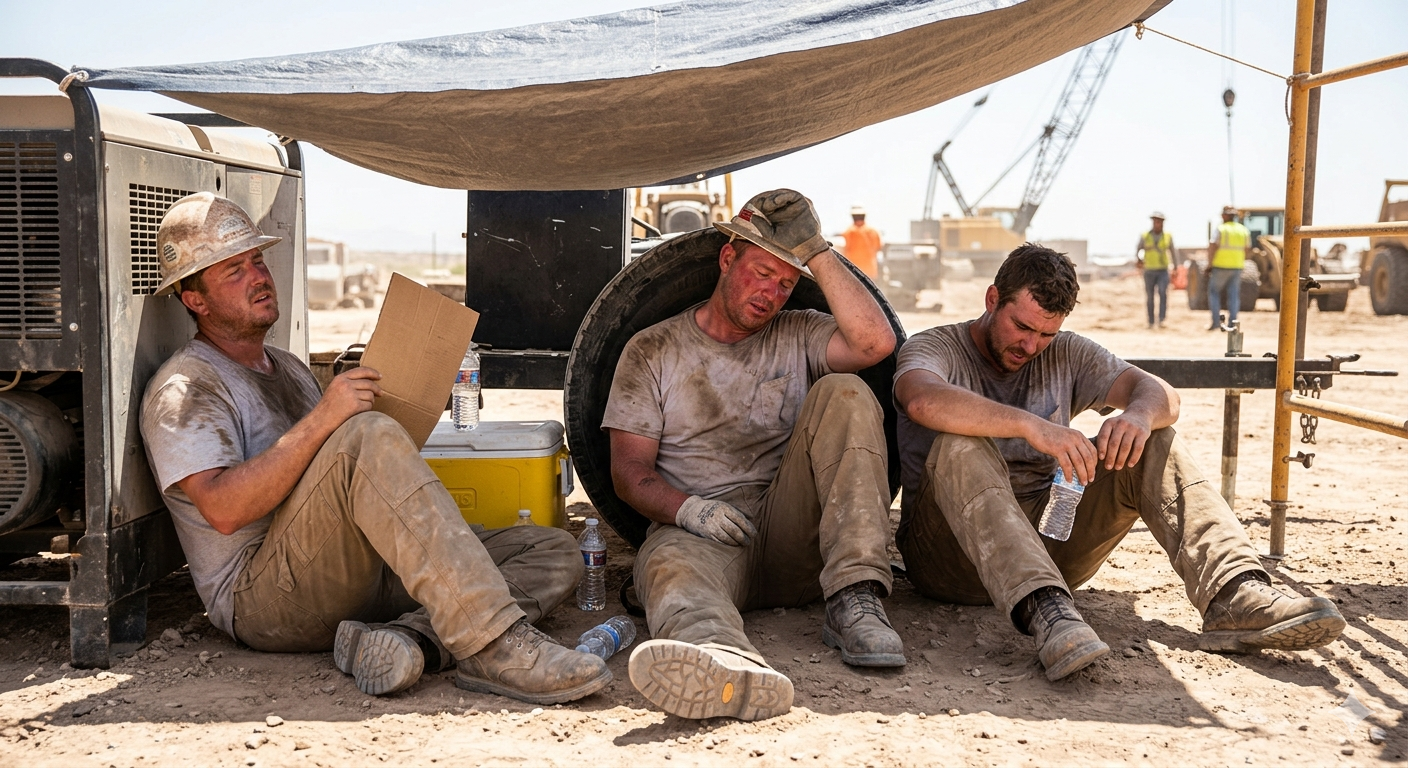
Why This Matters More in Arizona Than Anywhere Else
Arizona has one of the highest rates of outdoor worker heat deaths in the country. The combination of extreme dry heat, direct sun exposure, high physical exertion, and lack of shade creates conditions where heat illness can escalate from warning signs to medical emergency in under 30 minutes.
Most workplace heat fatalities aren't sudden collapses. They're preventable progressions — a worker shows warning signs that get dismissed or missed, conditions continue, and what should have been a 10-minute break in the shade becomes a 911 call.
As a foreman, supervisor, or safety manager, being able to identify each stage of heat illness — and knowing exactly how to respond — is the most important field skill you have during Arizona summer.
- Excessive sweating
- Mild fatigue
- Irritability or mood change
- Muscle cramps beginning
- Thirst, headache
- Heavy sweating, pale skin
- Nausea or vomiting
- Weakness, dizziness
- Fast, weak pulse
- Cool, moist skin despite heat
- Body temp above 103°F
- Hot, red, dry OR damp skin
- Rapid, strong pulse
- Confusion, slurred speech
- Loss of consciousness
Stage 1: Heat Stress — The Window to Act
Heat stress is your warning window. It's when the body is still managing heat load but starting to struggle. Workers at this stage are still functional — which is exactly why it gets missed. A worker who's "just a little tired" and "sweating a lot" is showing you early heat stress.
The mistake foremen make at this stage is telling the worker to take a drink of water and keep going. That can work if the next break is five minutes away and there's a real cooled space to recover in. It's a gamble if the rest area is a shade tent and the next break is 45 minutes out.
Symptoms to Watch For
- Noticeably more sweat than usual — soaking through clothing faster than normal
- Worker becomes quieter, less responsive, slightly irritable
- Muscle cramps, especially in legs, abdomen, or arms during heavy exertion
- Complaining of headache or dizziness — this is the clearest verbal warning sign
- Slowing down on physical tasks without obvious reason
What to Do
- Move the worker to the cooled rest area immediately — not after the current task is done
- Have them sit down, drink cool water (not ice cold — that can cause cramping), and rest
- Monitor them for 15–20 minutes before returning to work
- If they're not improving within 20 minutes in a cool environment, escalate to heat exhaustion protocol
Heat stress is reversible quickly with proper rest and cooling. Every minute you delay moving a heat-stressed worker to a cool environment is a minute closer to heat exhaustion. The 10-minute walk to a shade tent at 105°F interior temperature is not a recovery period — it's continued exposure.
Stage 2: Heat Exhaustion — Take It Seriously
Heat exhaustion means the body's cooling system is failing. The heart is working harder, blood pressure may be dropping, and the worker is in genuine physiological distress. This is not a "tough it out" situation. Workers at this stage need to stop working for the rest of the day — minimum.
Symptoms to Watch For
- Heavy sweating with pale, ashen-looking skin
- Visible weakness — struggling to stand, unsteady on their feet
- Nausea, possibly vomiting
- Rapid, weak pulse — you can feel it's fast but faint
- Cool, clammy skin despite the heat (the body is pulling blood away from the surface)
- Dizziness, possible fainting
What to Do
- Get the worker into your cooled rest area immediately — this is non-negotiable
- Lay them down with legs elevated if possible
- Remove any excess clothing, loosen what remains
- Apply cool, wet cloths to skin — especially neck, armpits, and groin
- Have them sip cool water if conscious and not vomiting
- Call 911 if they don't improve within 15 minutes, if they vomit, or if they lose consciousness
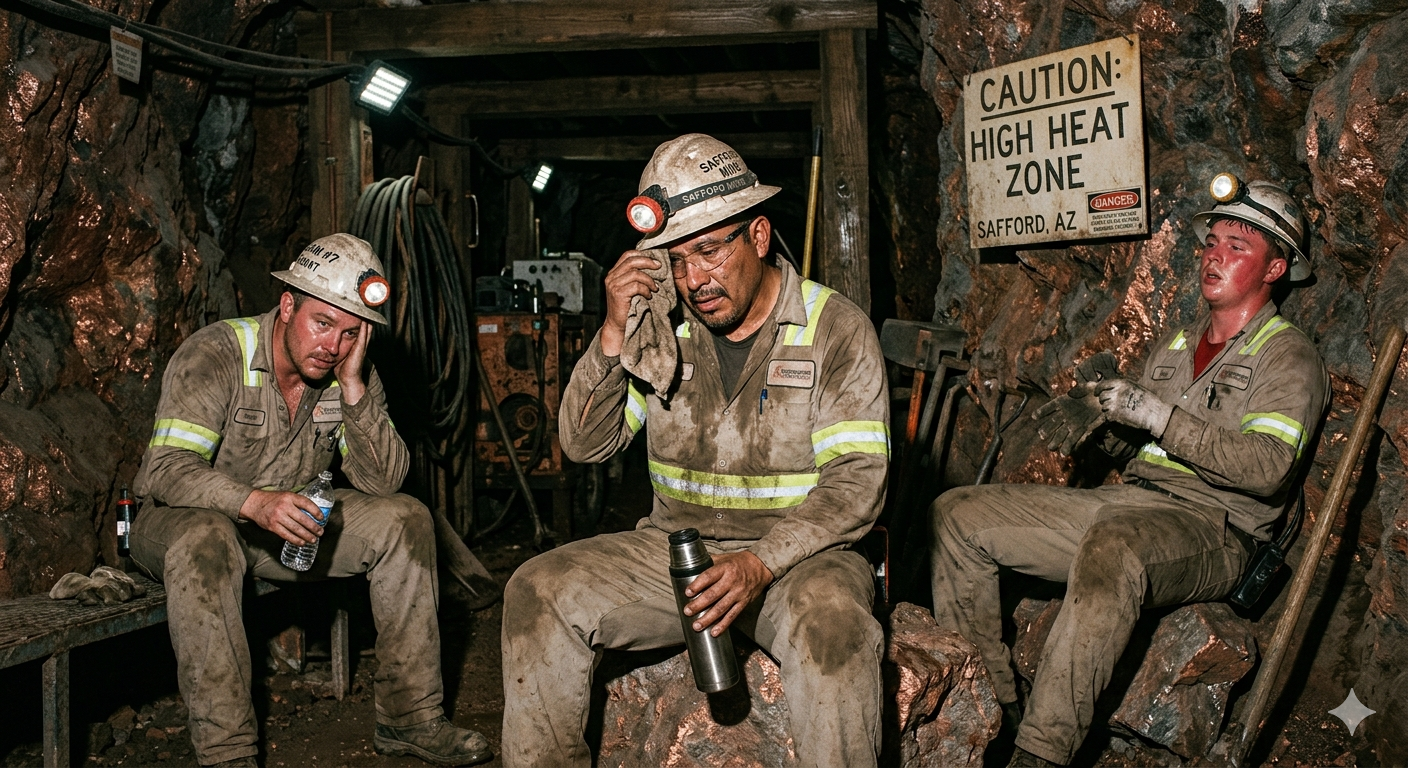
Stage 3: Heat Stroke — Call 911 First, Do Everything Else Second
Heat stroke is a medical emergency. It is not "really bad heat exhaustion" — it is organ failure beginning. The brain, kidneys, and liver are at risk. A worker in heat stroke who does not receive treatment within minutes can sustain permanent brain damage or die.
The key distinguishing symptom: confusion, slurred speech, or loss of consciousness combined with a body temperature above 103°F. If a worker's mental state changes — they're not making sense, they seem "out of it," they can't answer simple questions — that is heat stroke until proven otherwise.
Symptoms to Watch For
- Body temperature of 103°F or higher (feel their skin — it will be very hot)
- Hot, red skin — may be dry (classic heat stroke) or damp (exertional heat stroke)
- Rapid, strong pulse
- Confusion, disorientation, slurred speech — this is the most critical warning sign
- Loss of consciousness or seizures in severe cases
- Worker has stopped sweating despite the heat (in classic heat stroke)
What to Do — In This Order
- Call 911 immediately — do not wait to see if they improve
- While someone is on the phone with 911, move the worker to your cooled rest area
- Cool them aggressively — ice packs or cool wet cloths on neck, armpits, and groin; fan them actively
- Do not give them anything to drink if they are confused or unconscious — choking risk
- Stay with them until EMS arrives — monitor breathing
- Document the time symptoms were first noticed — EMS will need this
Do not drive a heat stroke victim to the emergency room yourself. Do not wait 30 minutes to see if the cool air helps. Call 911 the moment you identify heat stroke symptoms. Every minute of delay increases the risk of permanent injury or death. EMS has cooling protocols that begin in the field — time matters enormously.
The Buddy System: Your Best Preventive Tool
Workers experiencing heat stress often don't recognize it in themselves. Dizziness and mental fog are symptoms of the very condition that makes you less able to notice you're in trouble. This is why the buddy system works — pair workers and make each pair responsible for monitoring the other.
Implement it at morning briefing: every worker is assigned a buddy, every buddy knows the warning signs, and every buddy has explicit permission from the foreman to send their partner to the rest area without asking first. Remove the social friction of "I don't want to look weak" by making it a safety procedure, not a personal choice.
If a worker says they're fine but looks like they're not — treat what you see, not what you hear. A worker in early heat exhaustion will often insist they're okay. Your job as a foreman is to override that and get them into the cooled rest area anyway. It's not optional. It's your responsibility under OSHA and G-7483.
Give Your Crew a Real Place to Recover.
A Freez Bros 70°F climate-controlled rest area is where heat stress becomes a break instead of a fatality statistic. Workers who cool down properly recover fully and return to work safely. Workers who "rest" in a 100°F shade tent are still accumulating heat load. Check availability for your site today.